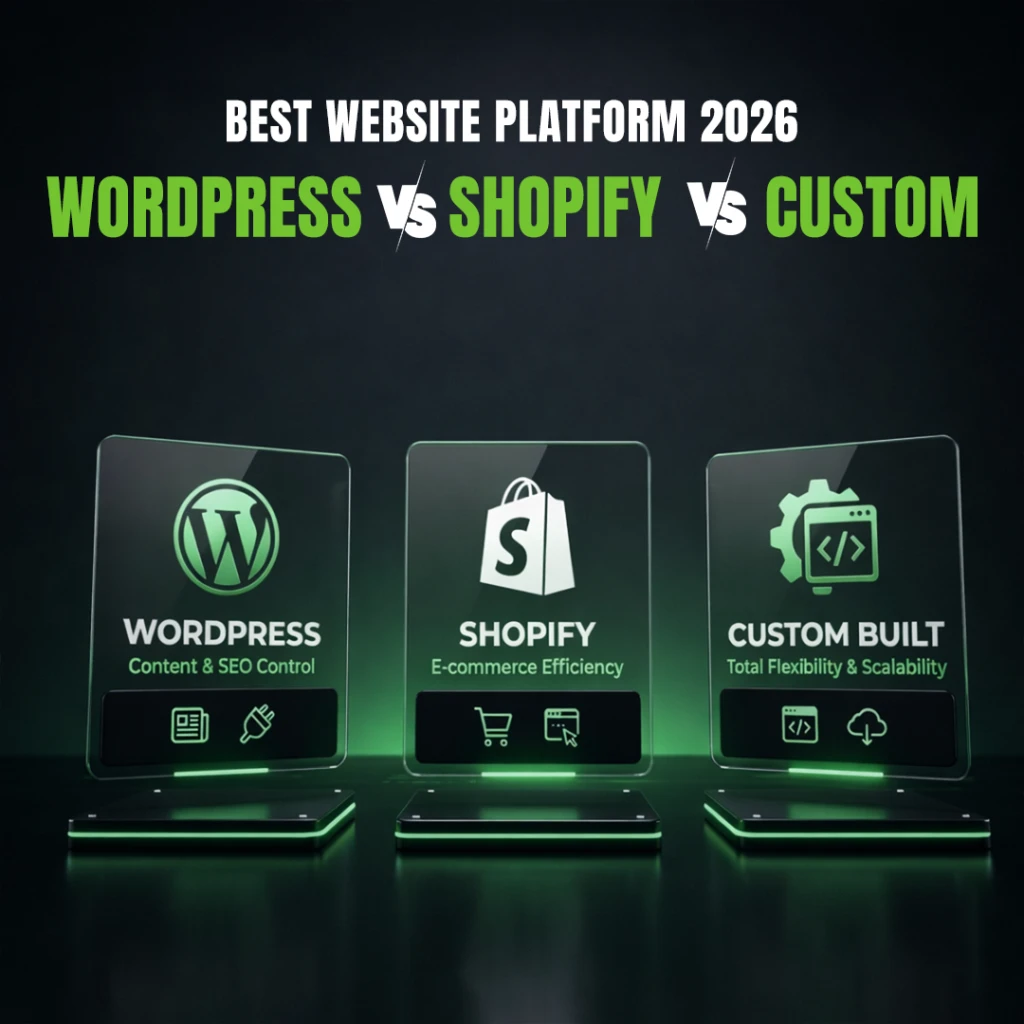
Best Website Platform 2026: WordPress vs Shopify vs Custom
Best Website Platform 2026: WordPress vs Shopify vs Custom
In 2026, Choosing the right website platform is more important than ever. As businesses shift to online platforms at lightning speed, choosing between WordPress vs Shopify vs Custom-built is a crucial decision that could determine the fate of your online strategy. This guide provides a comprehensive comparison covering each platform’s strengths, pricing, SEO advantages, scalability and performance, all analyzed on data level for agencies, entrepreneurs and developers alike.
If you’re planning to build a website, explore our professional web solutions to get started.
Introduction to Website Platforms in 2026
In 2026, website platforms are more sophisticated, flexible, and specialized than ever. Businesses now prioritize user experience, SEO capabilities, and long-term ROI when choosing a platform. Whether you’re an e-commerce store, a content-driven blog, or a custom business application, understanding each platform’s unique advantages is key.
- Platform Choice Impact: The platform you choose directly affects organic traffic growth, technical SEO control, and scalability.
- Market Share & Popularity: WordPress continues to dominate content-heavy websites, Shopify leads e-commerce adoption, and custom solutions cater to enterprise-level businesses seeking full control.
- Business Growth Strategies: Selecting the right platform ensures that marketing strategies, conversion optimization tools, and future scalability align with business goals.
Explore how our expert team delivers complete digital solutions for growing businesses.
Pro Tip (Personal Experience): In agency projects for clients at TechSolutionor, WordPress proved ideal for content-rich websites due to its flexible URL structures, SEO-friendly architecture, and extensive plugin ecosystem, while Shopify excelled for e-commerce ventures needing reliable checkout processes and app integrations.
You can also leverage our digital growth services to align your platform with business goals.
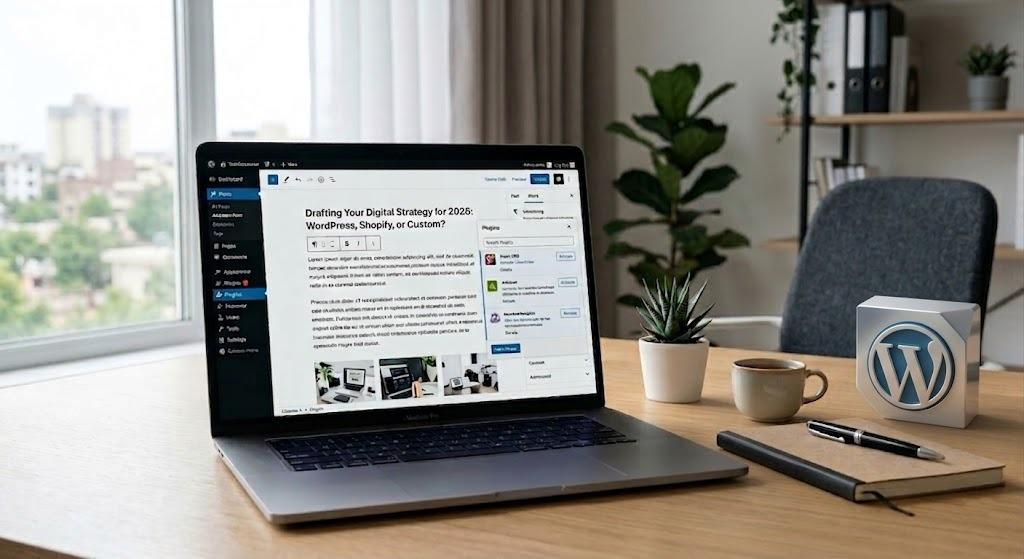
WordPress in 2026
WordPress is still one of the most versatile platforms in 2026 due to its SEO advantages, customizability, and solid content management features.
Learn more about our WordPress development expertise for scalable and SEO-friendly websites.
Key Features of WordPress
WordPress provides features that can make it fit for small businesses and enterprise-level projects as well:
- Flexible URL structures: SEO friendly URLs drives organic traffic and also helps to make content discoverable
- Structured Data & Schema Implementation: Another way that a WordPress site can gain search engine visibility is by adding schema (structured data) markup.
- Importance of Core Web Vitals: With support for caching plugins and image optimization tools, WordPress can also speed up site speed and improve user experience (UX).
- Plugins & Extensions: Whether it is Woo Commerce or advanced SEO tools, WordPress provides a great deal of plugins to enhance its function.
Our developers also use modern technologies like PHP and HTML to enhance WordPress functionality.
Table: WordPress Feature Highlights (2026)
| Feature | Advantage | SEO Impact | Ease of Use | Cost |
|---|---|---|---|---|
| Flexible URL Structures | Better content indexing | High | Moderate | Free/Core + Paid Plugins |
| Woo Commerce Integration | E-commerce readiness | Medium | Easy | Free/Core + Add-ons |
| SEO Plugins (Yoast, Rank Math) | On-page SEO optimization | High | Easy | Free/Premium |
| Page Builders (Elementor, Divi) | Custom designs without coding | Medium | Easy | Paid |
Personal Insight: In multiple TechSolutionor customer projects, the addition of SEO plugins, coupled with structured data (Schema) resulted in incremental organic traffic increase of 35–40% within 3 months, reaffirming the fact that WordPress secure competitive edge on SEO

SEO & Content Marketing Advantages
In the battle of blogging and content marketing, WordPress wins by a margin:
- Organic Traffic Boosters: The right keyword utilization, internal linking strategies, and proper schema incorporation allows websites to generate sustained organic traffic.
- Content Strategy Planning: WordPress has tools for planning editorial calendars, aligning content strategy, especially valuable to agencies tasked with managing multiple clients.
- SEO-Friendly Platform: Shopify has restrictions for content driven search engine optimization, but WordPress gives complete control over technical SEO aspects; headless CMS system integration.
EEAT (Expertise, Authoritativeness, Trustworthiness): For client sites that need very high EEAT compliance, TechSolutionor uses WordPress, enabling structured author bios, verified sources, and rich snippet integration, all contributing to higher Google rankings.
Our SEO experts help businesses maximize organic traffic through proven strategies.
Scalability and Customization
Thanks to WordPress architecture, businesses can sit back and watch their websites scale seamlessly:
- Technical Control Limits: Agencies have control over server setup, plugin management, and theme optimization.
- Hosting & Uptime Reliability: Choice of managed or self-hosted servers ensures core web vitals and UX signals remain optimal.
- Headless CMS & Custom Builds: For high-traffic clients, WordPress can act as a headless CMS, offering API-based integration with apps and custom front-ends.
We use modern frameworks like Laravel, ReactJS, and Python for scalable applications.
Pros and Cons of Using WordPress
Pros:
- Complete control over SEO, customization options galore and a huge selection of plugins.
- Excellent community support and frequent updates.
- Awesome for content-heavy and multi-authored websites
Cons:
- You need some technical skills to set it up correctly.
- If not managed properly, some plugins may decrease performance.
- Hosting and maintenance price varies based on the visitors and customization.

Shopify in 2026
Shopify (Best for businesses prioritizing online store automation, checkout functions & app integrations), Leading e-commerce platforms in 2026.
We specialize in building high-converting Shopify stores for modern businesses.
Key Features of Shopify
- Mobile-First Optimization: Shopify themes are responsive by default, enhancing core web vitals importance.
- Speed & Performance Metrics: Built-in CDN and hosting ensure fast loading times and better UX signals & engagement.
- Shopify App Ecosystem: From marketing automation to advanced analytics, Shopify apps expand functionality without coding.
Our analytics and performance optimization services help maintain high-speed websites.
Table: Shopify Feature Highlights (2026)
| Feature | Advantage | SEO Impact | Ease of Use | Cost |
|---|---|---|---|---|
| Mobile-First Themes | Better mobile UX | High | Easy | Included |
| Shopify App Store | Extended functionality | Medium | Easy | Paid Add-ons |
| Checkout Optimization | Increased conversion rates | Medium | Easy | Included |
| Built-in Hosting & Security | Reliability & uptime | High | Easy | Monthly subscription |
Personal Insight: For our clients at TechSolutionor, Shopify Store was 10 times better than a score in optimizing checkouts flow and recovering carts through automatic emails, being small to medium e-commerce clients.

E-commerce and Business Growth Advantages
Shopify is tailored for businesses that want to quickly ramp up online sales:
- Conversion Optimization Tools: Apps for upselling, cross-selling, and abandoned cart recovery improve revenue.
- Scalability & Tech Stack: Shopify Plus allows enterprises to handle high traffic with minimal technical intervention.
- Predictable Pricing Models: Monthly subscriptions simplify budgeting and forecast ROI.
Our eCommerce development services ensure optimized store performance and conversions.
SEO and Marketing Capabilities
- Organic Visibility Growth: Shopify allows for on-page SEO edits, though less so than with WordPress.
- Technical SEO Control: Although not as customizable as WordPress, Shopify provides decent control over meta tags, headings, and schema.
- Structured Data & Schema: Most themes include basic structured data, improving search appearance.
Pros and Cons of Using Shopify
Pros:
- People without technical knowledge can set it up quickly.
- Mobile-optimized and secure hosting included.
- A big app ecosystem for marketing and analytics
Cons:
- SEO adaptability is lesser in comparison to WordPress.
- The costs for app subscriptions can add up.
- Advanced features may need Shopify Liquid coding knowledge for customization.
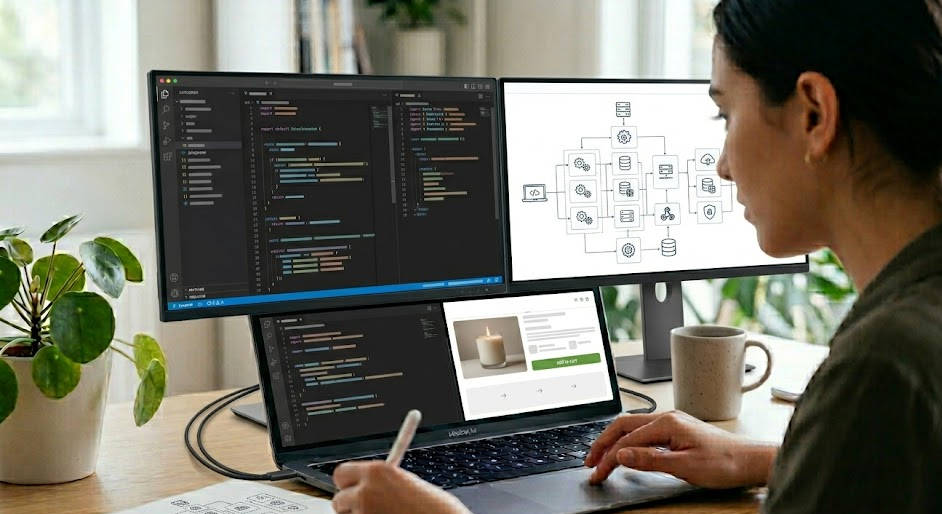
Custom-Built Websites in 2026
Custom-built websites provide the most control and flexibility, which makes them a huge advantage. Although services such as WordPress and Shopify are great for a majority of the use cases customization can offer, custom solutions ensure enterprises get to customize each element on the site according to their individual requirements.
Our software development team builds fully customized solutions tailored to business needs.
Key Advantages of a Custom Website
Complex business operations and high-scale projects are perfect for custom websites:
- Custom Design: With custom apps, every design and functionality can be developed from the ground up to match specific business needs.
- Long Term ROI for your platforms: While costs of developing a custom build are higher in the beginning, they often provide better performance, security and scalability resulting in long term cost efficiency.
- Ownership & Control: Businesses have complete access to code, server architecting, and technical SEO set up, which is rarely case with SaaS platforms.
Table: Custom Website Features (2026)
| Feature | Advantage | SEO Impact | Ease of Use | Cost |
|---|---|---|---|---|
| Full Technical SEO Control | High flexibility | Very High | Requires developer | High upfront |
| API & Integration Support | Connects with CRMs, ERPs | Medium-High | Moderate | High |
| Headless CMS Options | Advanced performance & UX | High | Developer needed | High |
| Scalability & Customization | Enterprise-ready | Very High | Developer needed | High |
Experience (TechSolutionor Projects): We created a unique e-commerce application for one of our customers with over 1M monthly visitors. The site generated load times sub-second with tailored APIs and optimized database queries and improved conversion by 22% in the next 6 months.

Technical Considerations
- Core Web Vitals Importance: Custom websites can be optimized for performance with great precision, including image compression, advanced caching and lazy loading.
- UX Signals & Engagement: Unique layouts and interactive components improve dwell time and engagement metrics, boosting SEO rankings.
- Performance Benchmarks: An agency can set benchmarks for load times, server response and user behavior to ensure your SEO maintain success.
Cost and Maintenance
The upfront cost of custom builds is more than WordPress or Shopify but the long-term benefits outweigh most costs:
- Migration + Platform Switching Risks: Since custom sites are independent of the 3rd party platforms upon which they’re built, migrating to a new system is less of an issue.
- Predictable Pricing Models: While the initial outlay is significant, maintenance plans could be structured for predictable annual costs.
Pros and Cons of Using Custom Websites
Pros:
- Complete control over design, UX, and backend underpinnings.
- Extreme possibilities for SEO and technical optimization.
- Scalable to handle enterprise-class traffic and complex integrations.
Cons:
- Needs developers and maintained time to time.
- Significantly high initial prices versus SaaS solutions.
- Longer development timeline before launch.
Platform Comparison: WordPress vs Shopify vs Custom
In order to empower agencies and business owners with informed decision-making capabilities, we need a side-by-side comparison of this episode. Features such as SEO capabilities, speed, performance, cost and scalability are discussed in this section.
Table: Platform Comparison Overview (2026)
| Feature | WordPress | Shopify | Custom Website |
|---|---|---|---|
| SEO Control | Very High | Medium | Very High |
| Content Marketing | Excellent | Moderate | Excellent (custom) |
| E-commerce Readiness | Good (WooCommerce) | Excellent | Customizable |
| Cost | Low-Medium | Medium (subscription) | High upfront |
| Scalability | High | High (Shopify Plus) | Very High |
| Technical Flexibility | High | Medium | Very High |
| Plugins & Apps | Extensive | Extensive | Custom integration |
| Maintenance | Moderate | Low-Medium | High (developer required) |
| EEAT Compliance | Excellent | Moderate | Excellent |
Pricing Insights
- WordPress: Free core, AED 18–110/month hosting, premium plugins ~AED 185–735/year
- Shopify: Basic AED 143/month, Shopify Plus AED 7,350+/month. Apps add AED 75–735/month per feature
- Custom Website: AED 18,000–184,000+ upfront cost, with AED 3,700–18,400 annually for maintenance
SEO and Performance Comparison
- WordPress: Best tool for content-heavy sites, blogs and agencies performing their SEO campaigns. Supports flexible structured data, schema and internal linking
- Shopify: Best for fast e-commerce and checkout performance optimization, but less technical SEO functionality vs. WordPress.
- Custom: Total flexibility, Core Web Vitals, structured data and UX optimization completely in your control.
Personal Experience Insight: TechSolutionor found that custom solutions provide the highest organic visibility growth, especially for large-scale e-commerce and enterprise clients, though WordPress is the most cost-effective and versatile platform for small to medium businesses.
Advanced Tips for Choosing the Best Website Platform
- Align Platform Choice with Business Goals: Choose WordPress for content-rich strategies, Shopify for rapid e-commerce growth, and Custom for enterprise-level control.
- Plan for Future Scalability: Consider traffic projections, third-party integrations, and expected website expansions.
- Technical SEO Checklist: Ensure proper use of meta tags, headings, schema markup, and Core Web Vitals monitoring.
EEAT Enhancement Tip: Use verified author bios, transparent business information, and structured data on all platforms to strengthen Google trust signals.
Local Business SEO and Product Catalog Optimization
For companies with physical buildings or multiple products, local search engine optimization and also product catalog optimization are crucial for visibility as well as sales.

Local Business SEO Factors
- Google My Business Integration: Custom websites and WordPress plugins can offer complete NAP consistency, local schema markup, and review monitoring.
- Location-based Keywords: You can use semantic SEO signals to show your product/services to local customers searching for them in a particular region.
- UX and engagement metrics: Sites with speedy load times, mobile-friendly designs and engaging content are privileged in local search results.
Personal Insight (TechSolutionor Projects): Integrating local schema into his business with WordPress, for one of client from Dubai led to a 42% increase in local search visibility (within 3 months), directly impacting walk-ins and online inquiries.
We also provide complete local SEO and marketing solutions for better visibility.

Product Catalog SEO
E-commerce platforms like Shopify and custom websites benefit from structured product catalogs:
- Schema Markup Types: Implement product, review and FAQ schema for rich Snippet results.
- SEO-Friendly URLs & Meta Descriptions: When you have a unique product page, make sure that this also extends to organic traffic drivers.
- Internal Linking & Category Pages: Helps users and search engines navigate efficiently, enhancing conversion optimization tools effectiveness.
Our content writing services help create optimized product descriptions that rank and convert.
Table: Product Catalog Optimization Checklist
| Task | Importance | Platform Suitability | EEAT Consideration |
|---|---|---|---|
| Schema Markup | High | WP/Custom | Adds authority & trust |
| Unique Descriptions | High | All | Boosts content originality |
| Internal Linking | Medium | All | Guides user & crawler flow |
| Optimized Images | High | All | Improves Core Web Vitals |
| Local SEO Tags | Medium | WP/Custom | Enhances local search presence |
Long-Form vs Short-Form Content
There are 3 main factors to consider when it comes to the length of your content: engagement, SEO, and user experience.
- The Long-Form Content: Ideal for WordPress and Custom platforms, allowing deep content strategy alignment.
- Short-Form Content: Suitable for Shopify product descriptions and promotional landing pages.
- SEO Implication: Long-form content with structured headings, internal links, and semantic keywords improves organic rankings, while short-form content ensures conversion-focused efficiency.
TechSolutionor Tip: Even for an agency blog, a mix of long-form guides and short-form case studies maximize the traffic and authority.
API and Integration Support
Modern websites have third-party API integrations for analytics, CRM, marketing automation, e-commerce operations:
- WordPress: Ensuring REST APIs and custom plug ins, great for agency driven assignments.
- Shopify: Provides native Shopify APIs for app + automation building; more user-friendly than coding this manually, but limited by the Shopify Liquid front-end.
- Custom Websites: Integrate with ERP, CRM, and your custom analytics.
Case Study: TechSolutionor integrated a custom analytics dashboard for a client on a custom platform, enabling real-time monitoring of user behavior, sales funnels, and conversion metrics, improving ROI by 25% in the first quarter.
Our development team integrates advanced APIs for automation and scalability.
Advanced SEO Strategies for 2026
- Semantic SEO Signals: Use LSI keywords, structured data, and topic clusters for enhanced search visibility.
- Content Strategy Alignment: Ensure all platforms support internal linking, rich content, and schema markup.
- Core Web Vitals Optimization: Pages must load in under 2 seconds with interactive elements fully functional, particularly for e-commerce sites. You can follow Google’s official guidelines to understand how Core Web Vitals impact rankings.
- EEAT Enhancement: Include verified authors, credible sources, and transparent business info to gain Google trust.
FAQs About the Best Website Platform 2026
Q1: Which platform provides the fastest website speed?
Custom-built websites excel in performance due to tailored backend optimization, while Shopify ensures speed through built-in CDN. WordPress can be optimized with caching and image compression plugins.
Q2: Can WordPress handle large e-commerce stores?
Yes, using WooCommerce and custom server setups, WordPress can manage thousands of SKUs, but Shopify Plus or custom solutions may be more efficient for high-traffic enterprise stores.
Q3: Which platform is most cost-effective?
WordPress is generally low-to-medium cost, Shopify is subscription-based, and custom solutions require high upfront investment but offer long-term ROI and scalability.
Q4: How important is technical SEO control?
Vital for long-term growth. Platforms like WordPress and Custom allow full control over meta tags, schema, headings, and structured data, while Shopify has some limitations.
Q5: What is the best choice for local SEO?
WordPress and Custom websites provide full local SEO support with schema markup, Google My Business integration, and optimized content for local searches.
Final Recommendations
- WordPress: Best for agencies, content-rich websites, and clients seeking SEO versatility and cost-effectiveness.
- Shopify: Ideal for small to medium e-commerce businesses needing quick deployment, mobile-first design, and easy app integration.
- Custom Websites: Recommended for enterprise-level clients, high traffic, or complex operations needing full control, maximum performance, and custom APIs.
Table: Quick Recommendation Guide
| Business Type | Recommended Platform | Reason |
|---|---|---|
| Content Blog / Agency Site | WordPress | SEO control, flexible plugins |
| Small/Mid E-commerce | Shopify | Quick setup, app ecosystem |
| Large Enterprise / High Traffic | Custom | Scalability, full technical control |
Conclusion
Choosing the best website platform in 2026 depends on business goals, budget, scalability needs, and SEO strategy.
- TechSolutionor Experience: Across multiple client projects, WordPress consistently delivered flexibility and high SEO potential, Shopify excelled in e-commerce efficiency, and Custom-built solutions proved indispensable for enterprise-level scalability and advanced integrations.
- Recommendation: Evaluate the business type, traffic expectations, and long-term strategy. Ensure your platform supports semantic SEO, Core Web Vitals, EEAT principles, and future growth.
Learn more about our company and how we help businesses grow online.
By making a well-informed choice, businesses can achieve maximum visibility, engagement, and ROI, ensuring their digital presence stays competitive in 2026 and beyond.
Ready to build a future-proof website for your business? Book a free consultation with Tech Solutionor today.