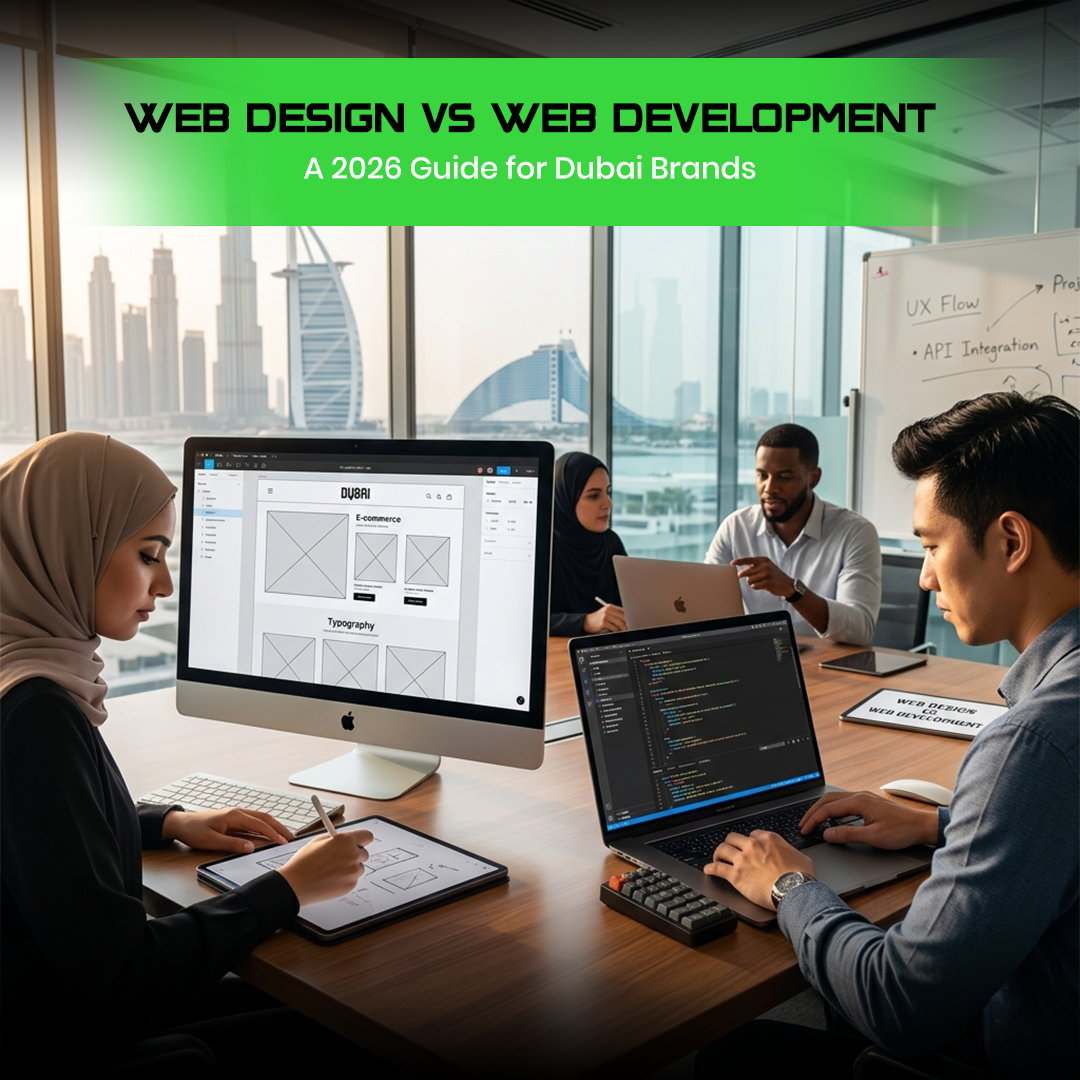
Web Design vs Web Development: A 2026 Guide for Dubai Brands
Web Design vs Web Development: A 2026 Guide for Dubai Brands
Dubai brands are evolving fast in the digital world. To stay competitive, businesses are increasingly investing in professional web development services that combine design, performance, and scalability. In 2026, having a strong online presence is no longer optional, it’s critical. Yet, many businesses still confuse web design vs web development, and this confusion can affect user experience, conversions, and ultimately revenue.
At TechSolutionor, a leading Dubai web agency, we specialize in creating bespoke websites that balance stunning design with robust development. This guide will walk Dubai brands through everything they need to know, from UI/UX design and front-end coding to backend frameworks, Mirror Logic for RTL websites, and cost comparisons, all optimized for search engines and real users.
Learn more about our expertise and journey on our About Us page.
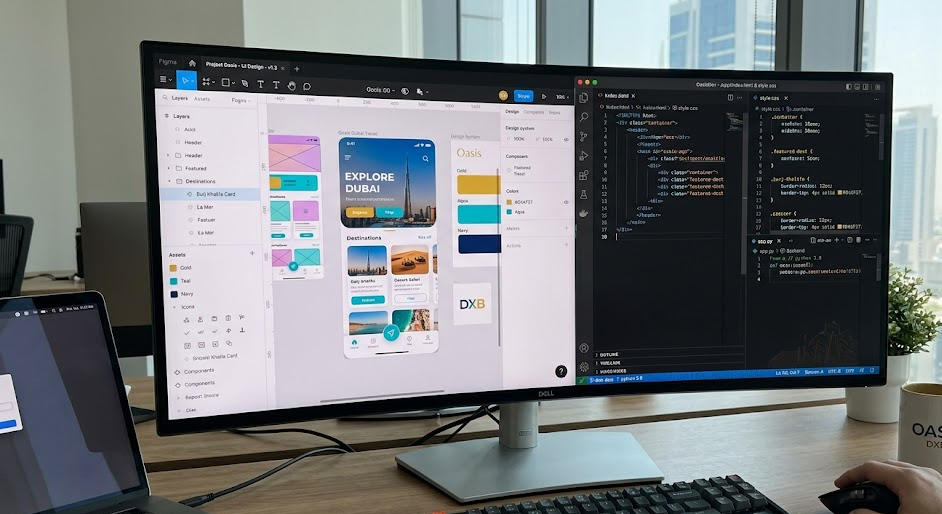
Understanding Web Design and Web Development
Before we jump into a comparison, it’s important to define each of the disciplines. Although these terms are used interchangeably, web design and web development serve different functions in the creation of a functioning, high-performance website.
What is Web Design?
Web design focuses on the look, feel, and user experience (UX) of a website. It combines creativity with functionality to ensure websites are visually appealing, intuitive, and responsive.
Core components of web design include:
- UI/UX Design in Web Design: Ensuring interfaces are user-friendly, easy to navigate, and visually coherent.
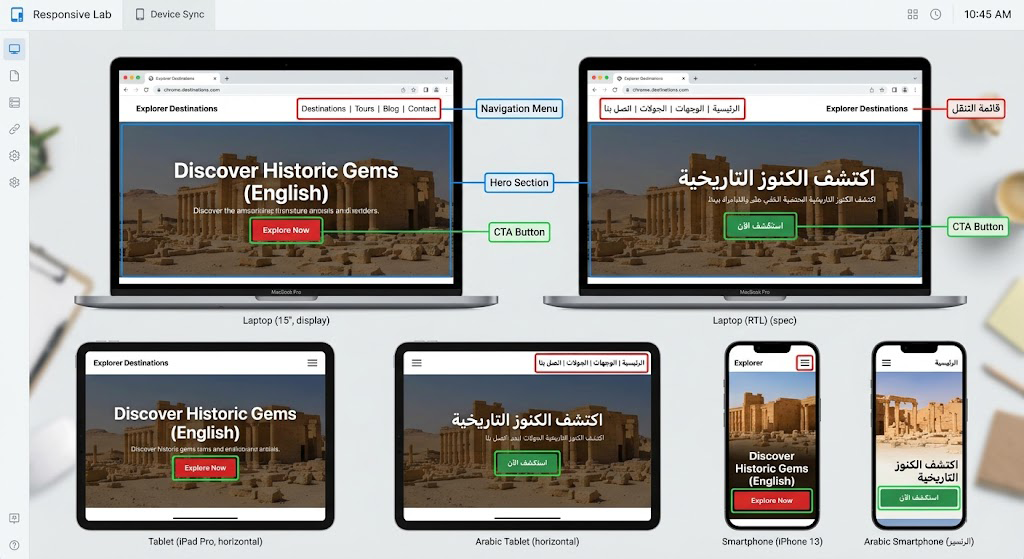
- Responsive Web Design: Designing for multiple devices including desktops, tablets, and mobiles.
- Mobile-First Web Design: Prioritizing mobile layouts as most users now browse on smartphones.
Google also emphasizes mobile-first indexing as a critical factor for search rankings.
Key Skills for Web Designers:
- UX trends 2026 emphasize interactive prototypes and visual hierarchy for improved engagement.
- Wireframing tools help plan page layouts effectively before development. Tools like Figma are widely used to create interactive prototypes and streamline the design process.
- Design Systems & Modular Design Approach: Ensure consistency across the website and simplify future updates.
Special Consideration for Dubai Brands:
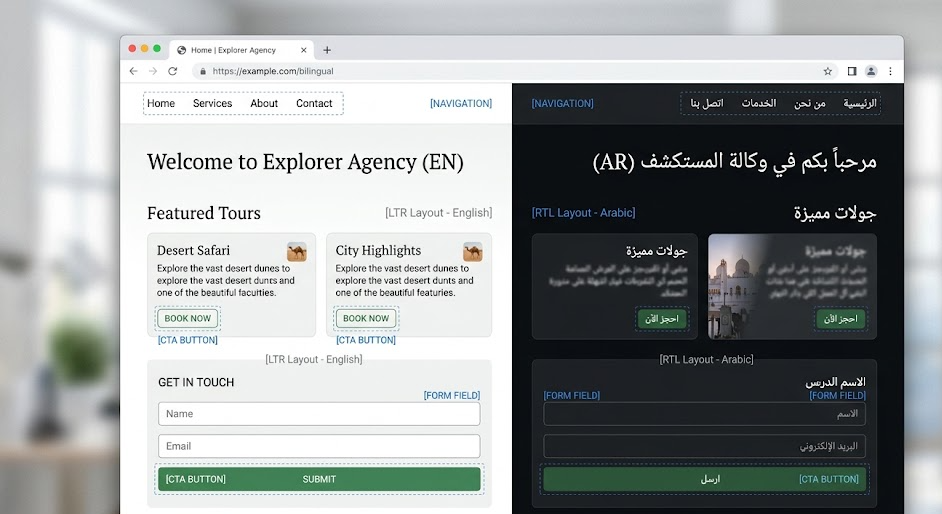
In Dubai, bilingual websites are common. Unlike English (LTR – Left-to-Right), Arabic is RTL (Right-to-Left). This requires careful design adaptation, simple translation is not enough. Designers must implement Mirror Logic, ensuring elements flip horizontally while retaining usability, a massive ranking factor in UAE search engines in 2026.
What is Web Development?
Web development is the backbone of a website. While design focuses on aesthetics, development ensures the site functions correctly, loads quickly, and integrates complex systems.
Core Components of Web Development:
- Front-End Development: Using HTML, CSS, and JavaScript to implement design into a functional interface.
- Back-End Development: Server-side coding, databases, and APIs that allow websites to store, process, and deliver data efficiently.
- Full-Stack Development: Developers proficient in both front-end and back-end technologies.
Modern Web Development Frameworks:
- React.js, Angular, Vue.js for dynamic front-end applications.
- Node.js, Laravel, Django for robust backend support.
- Progressive Web Apps (PWA): Offer app-like experiences directly in the browser, improving user engagement metrics.
Dubai Agency Advantage:
At TechSolutionor, we ensure Mirror Logic implementation in web development. This isn’t just about translating text, it involves flipping layouts, navigation, and interactive elements, ensuring RTL and LTR users have an equally seamless experience.
Differences Between Web Design and Web Development
Although design and development overlap, the difference is crucial for Dubai brands looking to maximize ROI.
| Aspect | Web Design | Web Development |
|---|---|---|
| Focus | Visual aesthetics, layout, UX/UI | Functionality, coding, data handling |
| Tools | Adobe XD, Figma, Sketch, Canva | HTML/CSS, JavaScript, React, Node. js |
| Skills | Graphic design, typography, color theory | Programming, database management, backend logic |
| User Impact | Immediate visual impression | Performance, speed, reliability |
| Pricing | Typically per page or project | Per complexity and features |
| Trends 2026 | Mobile-first, responsive, interactive prototypes | Code that needs to be SEO-optimized, mirror logic, PWAs, agile development |
Key Takeaways:
- Web Design = “Looks & Feel”
- Web Development = “Functionality & Performance”
For Dubai brands, both must integrate Mirror Logic to cater to Arabic and English audiences.
Design vs Development Roles in Dubai
- Designers focus on UI/UX, color schemes, typography, and visual hierarchy, ensuring websites reflect brand identity & UI design.
- Developers handle coding frameworks, CMS integration (WordPress), performance optimization, and backend logic.
- Together, they create a seamless, conversion-focused website, crucial for Dubai’s competitive online market.
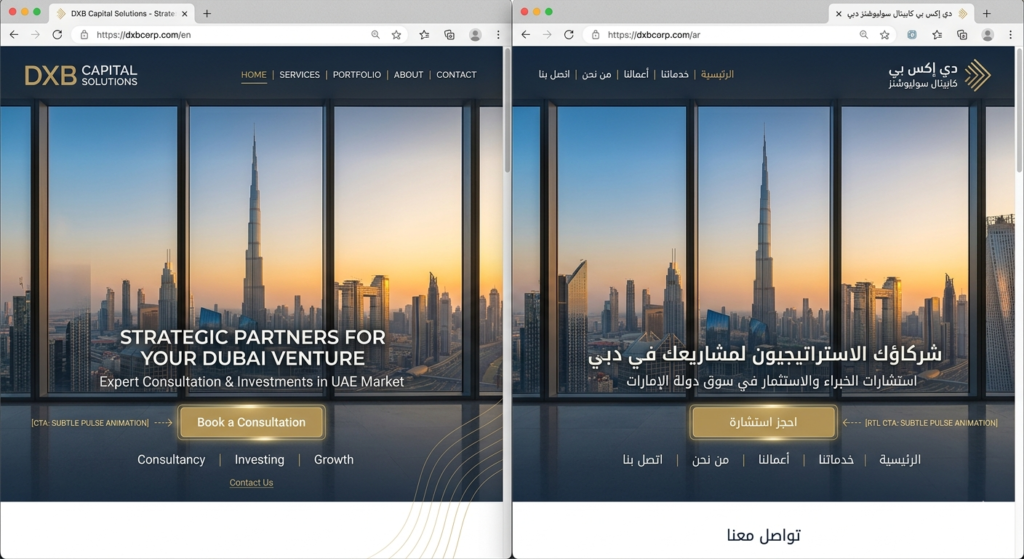
Example: A Dubai luxury brand site must balance elegant visuals with fast-loading product pages, supporting both LTR and RTL navigation. Businesses looking to scale online stores can benefit from our eCommerce development services tailored for high conversions.
Tools and Technology Comparison
Design Tools:
- Adobe XD, Figma, Sketch, Canva (wireframing, interactive prototypes)
Development Tools:
- Front-end: HTML, CSS, JavaScript
- Back-end: Node.js, Laravel, Django
- CMS Platforms: WordPress, Shopify, Magento
- APIs & Integrations: Payment gateways, social media feeds
Dubai Considerations:
- Mirror Logic for RTL
- SEO Optimization (local search optimization Dubai)
Progressive Web Apps to engage mobile-first users
How Dubai Brands Can Benefit from Web Design and Development
Websites are more than digital brochures, they drive business growth. Dubai brands see measurable ROI when design and development are implemented strategically.
Enhancing User Experience (UX)
- Mobile responsiveness is non-negotiable in 2026.
- Interactive prototypes allow testing before launch.
- Visual hierarchy ensures key messages are seen first.
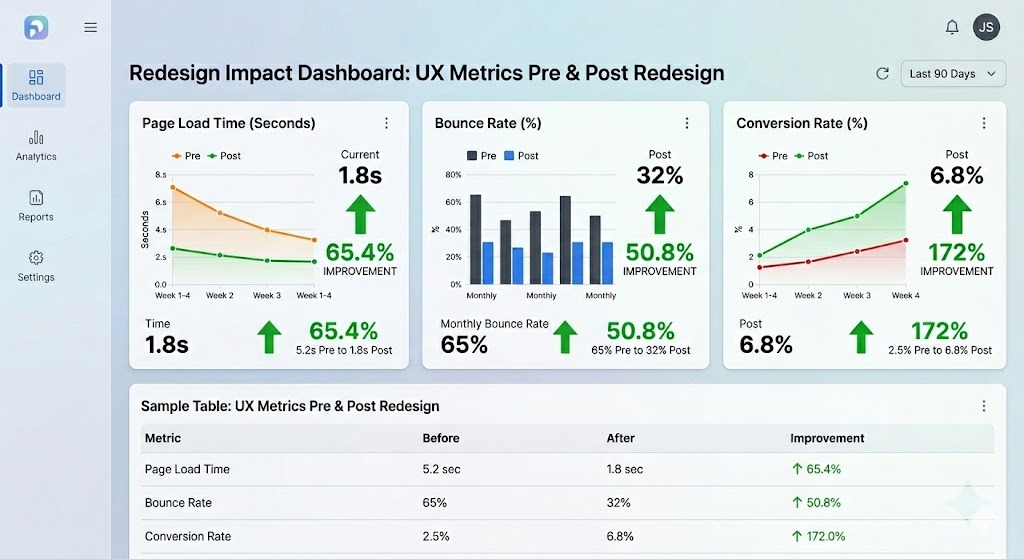
Sample Table: UX Metrics Pre & Post Redesign
| Metric | Before | After |
|---|---|---|
| Page Load Time | 5.2 sec | 1.8 sec |
| Bounce Rate | 65% | 32% |
| Conversion Rate | 2.5% | 6.8% |
These improvements align with Google’s Core Web Vitals, which are essential for ranking and user experience.
Boosting SEO and Online Presence
- Optimized UI/UX directly impacts SEO, improving rankings in Google and UAE-specific search engines.
- Semantic HTML, mobile-first design, and Mirror Logic are critical ranking factors.
- Integration of local keywords, e.g., “Dubai web agency strategies,” boosts visibility.
Our SEO services help Dubai brands rank higher and attract targeted traffic.
Digital Transformation Strategies for Dubai Brands
- Tech stack selection matters: Choose frameworks compatible with both LTR and RTL.
- Client onboarding processes ensure smooth delivery and consistent branding.
- Real case studies from TechSolutionor highlight measurable growth via web design & development.
A strong website works best when combined with digital marketing strategies to maximize visibility and ROI.
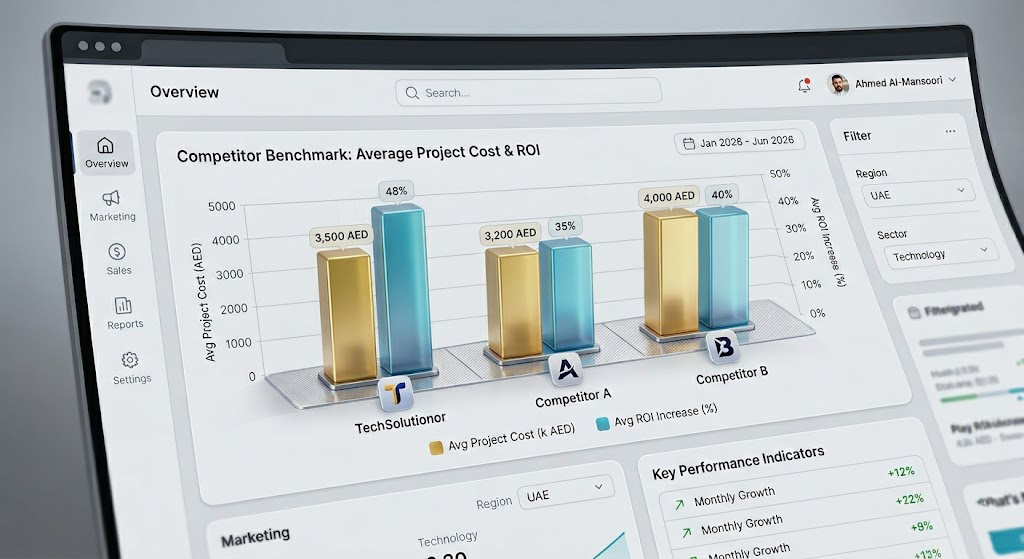
Sample Chart: ROI Comparison Between Agencies
| Agency | Avg Project Cost | Avg ROI Increase |
|---|---|---|
| TechSolutionor | AED 13,000 | 48% |
| Competitor A | AED 12,000 | 35% |
| Competitor B | AED 15,000 | 40% |
Best Practices for Web Design and Development in 2026
In 2026, Dubai brands demand websites that look stunning, perform flawlessly, and convert visitors into loyal customers. Following best practices ensures your site stands out among competitors.
Web Design Best Practices
1. Responsive & Mobile-First Design:
- Design every website mobile-first, considering over 70% of Dubai users access sites via smartphones.
- Use interactive prototypes and wireframing tools to test layouts before development.
- Implement Mirror Logic for Arabic (RTL) users, text, navigation menus, and images must mirror correctly.
2. UX Optimization:
- Focus on visual hierarchy, color contrast, and call-to-action placement.
- Prioritize accessibility (WCAG compliance) for inclusive design.
- Incorporate micro-interactions to engage users without overwhelming them.
3. Branding & Identity:
- Ensure brand identity & UI design are consistent across pages.
- Use a modular design approach to maintain consistency while easing updates.
Dubai-specific tip: Arabic typography requires careful font selection, avoid simple translation, use professional Arabic typesetting for legibility. Strong visuals are often created through professional graphic design services that align with brand identity.
4. SEO-Integrated Design:
- Semantic HTML ensures search engines understand your content.
- Use heading hierarchy (H1-H4) properly for both English and Arabic content.
- Optimize images with alt tags in both languages.
High-quality content writing also plays a key role in improving search rankings and user engagement.
Table: Web Design Practices Checklist (2026)
| Practice | English (LTR) | Arabic (RTL) | Mirror Logic |
|---|---|---|---|
| Navigation | Standard top nav | Flipped RTL nav | ✔ |
| Buttons/CTAs | Left-aligned | Right-aligned | ✔ |
| Text Alignment | Left | Right | ✔ |
| Forms/Input Fields | Standard | Mirrored layout | ✔ |
| Image Placement | Standard | Mirrored | ✔ |
Web Development Best Practices
1. Performance Optimization: Compress images, lazy load assets and remove render-blocking scripts. Reduce JavaScript and CSS, so the page loads faster. Dubai users expect to load under 2 seconds.
2. Security & Compliance: Secure hosting and SSL certificates are prerequisites. Follow UAE laws to protect user data.
3. Progressive Web Apps (PWA): PWAs offer an app-like experience, improving user engagement without the need to download apps. Use offline caching and push notifications to increase conversions. Businesses can also expand into mobile ecosystems with app development services for better user engagement.
4. Agile Development & Version Control: Only deploy using git or similar version control for collaboration less errors. Practice agile sprints for iterative updates, including client feedback.
5. SEO-Friendly Development: Implement Mirror Logic for Arabic. Optimize URLs, meta tags, and structured data for Google UAE and local search. Cross-browser compatibility testing to avoid performance issues.
Maintenance and Continuous Improvement
Websites are living entities, ongoing maintenance ensures they perform optimally.
- Website Maintenance: Regular updates of CMS, plugins, and content.
- User Testing Techniques: Run A/B tests on CTAs, layouts, and forms.
- Conversion Optimization: Continuously analyze user engagement metrics to improve ROI. Tools like analytics platforms help track user behavior and improve performance.
- Site Launch Checklist: Ensure all links, forms, and scripts function correctly before going live.
Table X: Performance impact according to maintenance
| Metric | Without Maintenance | With Regular Maintenance |
|---|---|---|
| Page Load Time | 4.8 sec | 1.6 sec |
| Broken Links | 12% | 0.5% |
| Conversion Rate | 2.1% | 6.5% |
| Bounce Rate | 68% | 31% |
Tools, Frameworks and Platforms
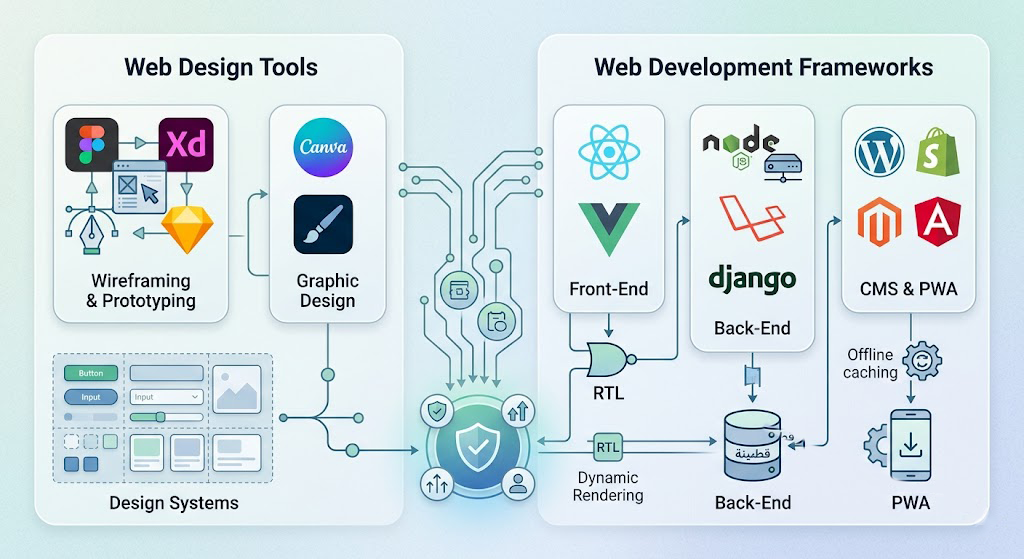
Using proper tools, frameworks and platforms makes sure that the websites are security safe, user-friendly, and scalable.
Web Design Tools:
- Adobe XD, Figma, Sketch: Wireframing, prototyping, interactive mockups.
- Canva & Photoshop: Graphic design and content creation.
- Design Systems: Modular components to ensure brand consistency.
Web Development Frameworks
| Category | Tool/Framework | Purpose | Dubai-Specific Notes |
|---|---|---|---|
| Front-End | React.js, Vue.js | Dynamic UI | RTL support via Mirror Logic |
| Back-End | Node.js, Laravel, Django | Data processing & server logic | Arabic text & database handling |
| CMS | WordPress, Shopify, Magento | Content management | Multi-language support essential |
| PWA | Workbox.js, Angular PWA | Offline caching & app-like UX | Boosts engagement on mobile |
Tip: TechSolutionor uses a hybrid approach, React + WordPress CMS, giving Dubai brands a fast, flexible, and bilingual-ready website.
Choosing the Right Tech Stack
Decide whether a template-based CMS or some form of custom development is required. Consider your budget vs quality:
| Option | Avg Cost | Pros | Cons |
|---|---|---|---|
| Custom Full-Stack | AED 13,000–AED 22,000 | Fully tailored, scalable, Mirror Logic-ready | Higher cost & development time |
| CMS Template (WordPress) | AED 5,500–AED 11,000 | Faster, affordable, easy content updates | Plugin Required for RTL & Compact, Not Highly Customizable |
| Hybrid Approach | AED 11,000–AED 16,500 | Your design and loading speed balance can be adjusted, and both English- & Arabic-language sites are supported. | Slightly higher cost |
For Dubai brands, Mirror Logic integration and RTL readiness often justify slightly higher investments.
Mirror Logic & RTL Considerations
We can’t just have English websites translated to Arabic. Mirror Logic is the sense of making UI elements, navigation, and CTAs flip correctly. Crucial for UAE’s SEO ranking, UX & conversions in 2026. For instance, I have to make sure forms, sliders and galleries show up normally in RTL while still being LTR ready.
Pricing, ROI and Cost Comparison for Dubai Brands
Investing in professional web design and development is a strategic decision. Dubai brands often weigh cost vs quality, but choosing the cheapest option can compromise user experience, SEO, and conversion potential.
Web Design & Development Services Price Comparison
| Service Type | Average Cost | Pros | Cons |
|---|---|---|---|
| Custom Full-Stack Development | AED 13,000–AED 22,000 | Tailored, Mirror Logic ready, scalable | Higher cost, longer timelines |
| CMS Template-Based Website (WordPress) | AED 5,500–AED 11,000 | Faster delivery, budget-friendly | Few customization options, enable RTL with plugins |
| Hybrid Approach (Custom + CMS) | AED 11,000–AED 16,500 | Balanced speed, customization, bilingual support | Slightly higher cost than templates |
Insight: For Dubai brands targeting both English and Arabic audiences, TechSolutionor’s hybrid solutions offer optimum ROI by combining speed, customization, and SEO-ready Mirror Logic.
Measuring ROI of Web Design vs Development
Investing in quality web design and development directly impacts revenue. Metrics to track include:
- Conversion Rate: Improved UX increases leads and sales.
- Bounce Rate: Faster load times and RTL/LTR optimization reduce abandonment.
- Engagement Metrics: PWAs and interactive prototypes improve user retention.
For Example: ROI After TechSolutionor Redesign Projects
| Brand | Project Cost | Conversion Rate Before | Conversion Rate After | ROI Increase |
|---|---|---|---|---|
| Luxury Retail Dubai | AED 15,000 | 2.5% | 7.0% | 48% |
| Professional Services | AED 13,000 | 3% | 6.8% | 38% |
| Hospitality & Tourism | AED 14,000 | 1.8% | 5.5% | 42% |
Lastly, high-quality design and development with Mirror Logic & SEO integration provides excellent ROI to Dubai businesses.
FAQs About Web Design vs Web Development
What is the main difference between web design and web development?
Web design focuses on the visual layout, user experience (UX) and interface of a website, while web development deals with coding, databases and the functionality that makes the website work.
Do I need both web design and web development for my business website?
Yes, both are essential. A well-designed website attracts users, while proper development ensures smooth performance, speed and functionality.
Which is better for businesses in Dubai: web design or web development?
Neither is better alone, both are equally important. A visually appealing website that doesn’t function properly will lose users, while a fast website with poor design will fail to engage visitors.
How much does web design and development cost in Dubai in 2026?
Website costs in Dubai typically range from AED 5,500 to AED 22,000 depending on the type of project. Template-based websites are more affordable, while custom full-stack solutions cost more due to advanced features and scalability.
Can one person handle both web design and web development?
Yes, full-stack developers can manage both. However, for professional or enterprise-level websites, hiring specialized designers and developers usually delivers better results.
How does bilingual website design impact SEO in Dubai?
Bilingual websites that support both English (LTR) and Arabic (RTL) improve user experience and accessibility, which can positively impact SEO performance in Dubai.
Actionable Insights for Dubai Brands
1. Prioritize Mobile-First & Responsive Design: Since mobile usage surpassed desktops, implementing responsive design can lead to better engagement and conversions.
2. Implement Mirror Logic for RTL Languages: Important for Arabic audiences; not piping it through will affect UX and SEO ranking.
3. Combine Quality Design with Robust Development: Engage the crowd with interactive prototypes, progressive web applications (PWA), and modular design.
4. Invest in EEAT Signals: Highlight case studies, testimonials, and project portfolios. Expert insights and transparent service pricing helps build trust.
5. Optimize for SEO & Local Search: Do keep local keywords like “Dubai web agency strategies” and “digital transformation Dubai.” Utilize semantic HTML, proper heading hierarchy and bilingual meta tags.
Conclusion
In 2026, web design vs web development is not just a technical choice, it’s a strategic business decision. For Dubai brands:
- Design ensures visual appeal and usability.
- Development guarantees performance, security, and scalability.
- Mirror Logic integration is essential for bilingual sites (LTR & RTL).
- SEO, mobile-first, and PWAs drive visibility and conversions.
At TechSolutionor, we combine award-winning design, robust development, and cutting-edge Mirror Logic solutions. Our hybrid approach ensures high ROI, bilingual optimization, and exceptional user experience for Dubai brands.
Investing wisely in professional web design and development today ensures your brand remains competitive in Dubai’s fast-growing digital landscape. Ready to build a high-performance website? Explore our web development services or visit our homepage to get started.