How Graphic Designing Creates a Lasting First Impression
How Graphic Designing Creates a Lasting First Impression
Fifteen-plus years into design work and I still tell every new client the same uncomfortable truth. People judge your business in about fifty milliseconds, before they’ve read a single word you’ve written. That judgment isn’t based on your prices or your service quality. It’s based on how things look. A logo, a color palette, a layout that either feels put together or feels like it was thrown at a wall.
That’s the whole point of graphic design, really. It’s not decoration sitting on top of a business. It’s often the first conversation a customer has with your brand and it happens before they’ve spoken to anyone or read a single sentence. I’ve watched this play out enough times, a beautifully run business losing customers simply because the visuals made it look untrustworthy, that I stopped treating design as a “nice extra” a long time ago.
If you’re trying to figure out whether design actually matters for your business or you’re trying to understand what good design even looks like, this is everything I’ve picked up over the years, minus the fluffy agency talk.
What Graphic Design Actually Is
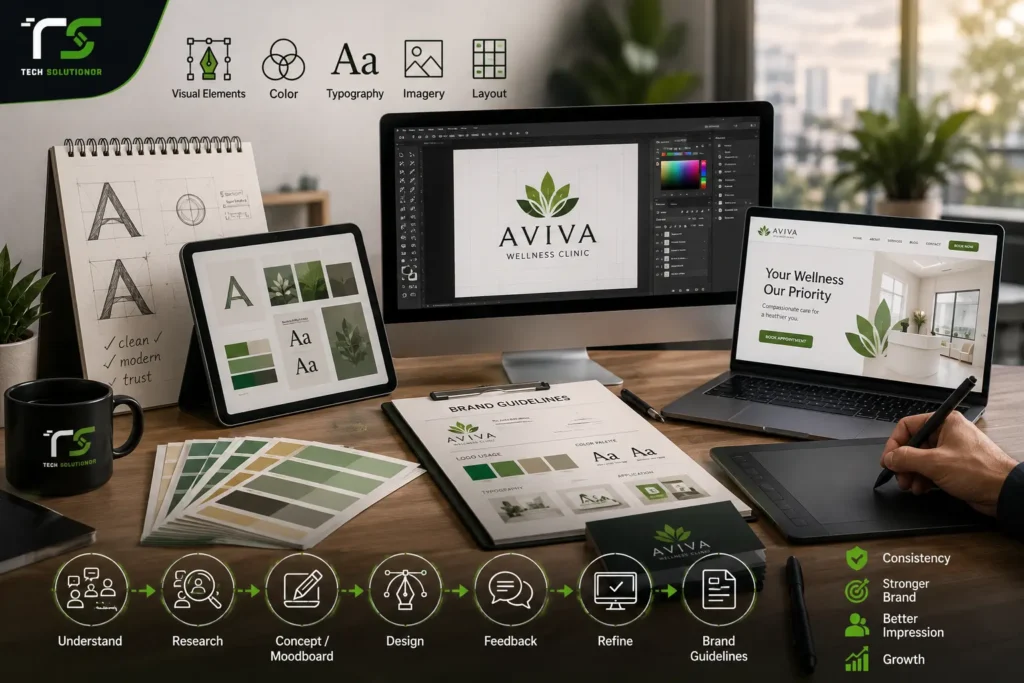
At its core, graphic design is the practice of using visual elements, color, typography, imagery, layout, to communicate a message clearly and shape how people feel about something. That “something” could be a logo, a website, a product package, a social media post or an entire brand identity spanning dozens of touchpoints.
People sometimes think design is just about making things pretty. It isn’t, not really. Good design solves a problem. It answers a question the viewer didn’t even know they were asking, like “can I trust this company” or “does this brand actually understand what I need.” A logo that looks cheap quietly tells people the service might be cheap too, even if that’s completely untrue.
I worked with a boutique clinic in Sharjah a few years back whose branding looked like it was designed in 2009 and never touched again. Their actual service was excellent, staff loved by patients and great reviews.
But new patients kept hesitating before booking. Once we rebuilt their visual identity properly, with a clean logo, a calming color palette and a redesigned website, their booking rate went up noticeably within the first two months. Nothing about their actual service changed. Only the first impression did.
How the Graphic Design Process Actually Works
Good design doesn’t start with opening a design tool and picking colors. It starts with understanding the business, who the audience is, what competitors look like and what feeling the brand needs to communicate.
From there, a designer usually moves into concept sketches or moodboards, testing directions before committing to one. Once a direction feels right, it gets refined into actual assets, logos, color systems, typography choices, templates, whatever the project needs.
Feedback rounds happen throughout this, not just at the end. And then comes the part a lot of businesses skip, building proper brand guidelines so the design stays consistent across everything, the website, social posts, print materials, even email signatures.
Skipping that last step is honestly one of the fastest ways I’ve seen a strong design go sloppy within a year, because everyone on the team starts improvising.
Types of Graphic Design Every Business Should Understand
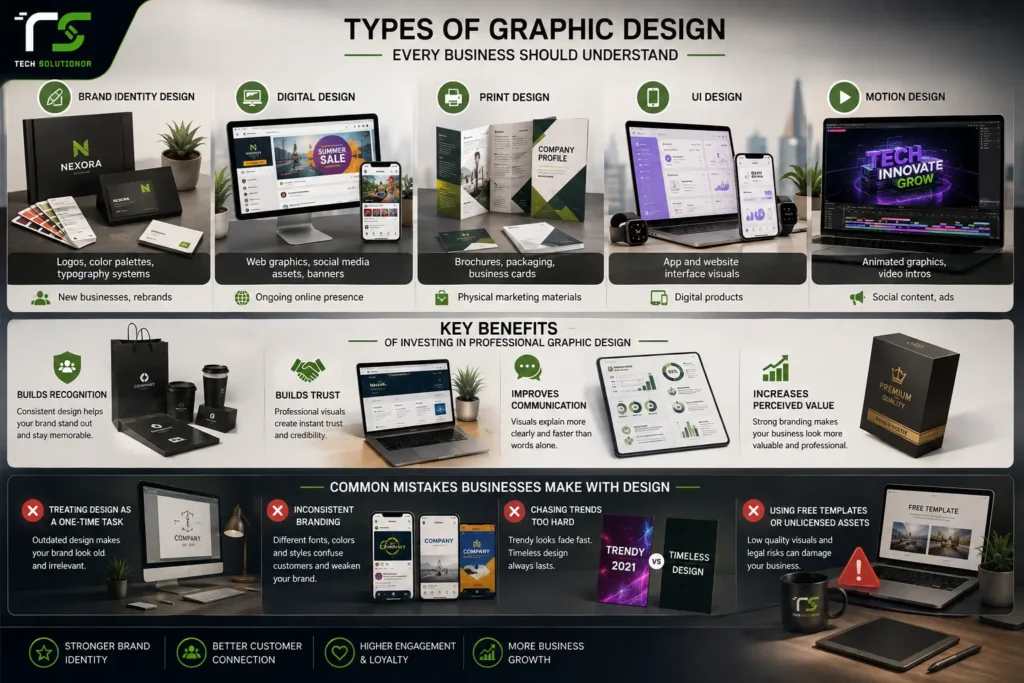
Not all design work is the same and knowing the difference helps when you’re briefing a designer or comparing service providers.
| Type | What It Covers | Common Use Case |
| Brand identity design | Logos, color palettes, typography systems | New businesses, rebrands |
| Digital design | Web graphics, social media assets, banners | Ongoing online presence |
| Print design | Brochures, packaging, business cards | Physical marketing materials |
| UI design | App and website interface visuals | Digital products |
| Motion design | Animated graphics, video intros | Social content, ads |
A lot of businesses I’ve worked with only think they need one of these when they first reach out, usually a logo and then realize halfway through that their digital marketing and social presence need matching visual assets too. It’s worth planning for that overlap from the start rather than discovering it later.
Key Benefits of Investing in Professional Graphic Design
Strong design builds recognition. People remember brands that look consistent far more than ones that shift their look every few months. It also builds trust faster than almost anything else on a website or storefront, since polished visuals signal that a business cares about the details, which customers quietly assume extends to the actual service too.
Good design also improves communication. A well-designed infographic explains something in seconds that would take three paragraphs to write out. And from a purely commercial angle, consistent branding across every touchpoint tends to increase perceived value, which means customers are often willing to pay more for something that simply looks more credible, even when the underlying product is identical to a competitor’s.
Common Mistakes I See Businesses Make With Design
The most common one is treating design as a one-time task instead of an ongoing part of the brand. A logo made five years ago, never revisited, starts to look dated fast and most business owners don’t notice because they see it every day. Inconsistency is another big one, different fonts and colors across the website, social media and printed materials, which quietly makes a business look less established than it actually is.
I also see businesses chase trends too hard, jumping on whatever visual style is popular that year instead of building something that ages well. And plenty of business owners try to save money by using free templates or unlicensed stock imagery, which occasionally causes real legal headaches down the line, not just a weaker-looking brand.
Best Practices and Expert Tips for Better Design Outcomes
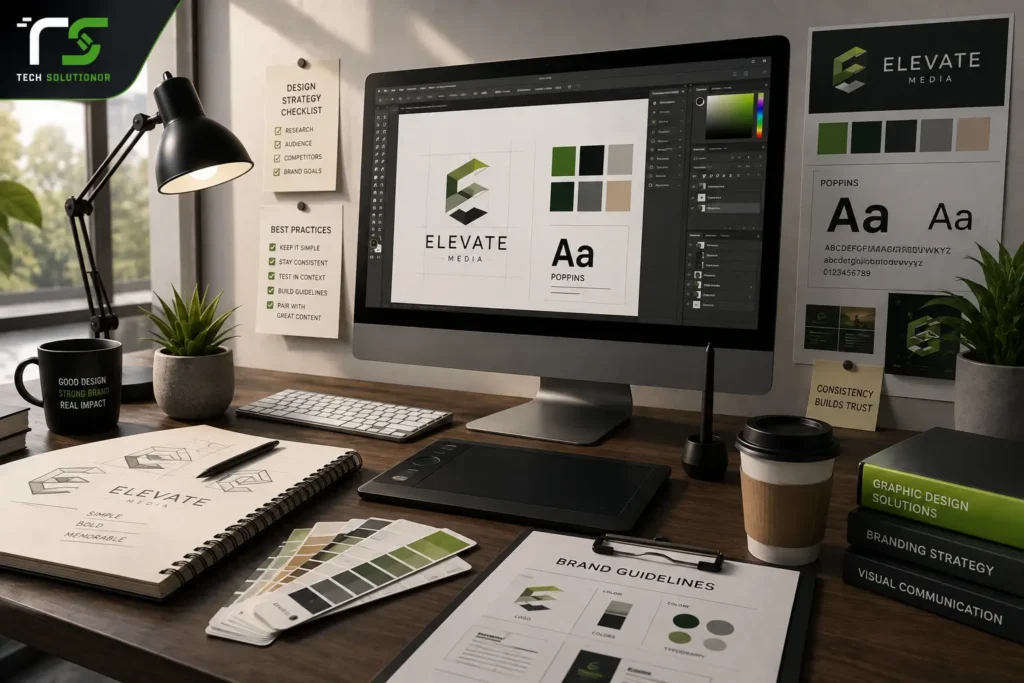
Start with research before a single visual gets created, understand your audience and your competitors properly first. Keep your color palette and typography limited and consistent rather than trying to use everything at once, restraint almost always looks more premium than excess. Build brand guidelines early, even if your business is small, because retrofitting consistency later is far more painful than maintaining it from day one.
Test your design across real contexts too, a logo that looks great on a large screen can fall apart shrunk down to a tiny app icon or a social media profile picture. And when you’re producing content regularly, pairing your visual identity with solid content writing makes a real difference, since strong visuals paired with weak copy still undersell the brand.
Pros and Cons of Investing in Professional Graphic Design
On the upside, professional design builds instant credibility, strengthens brand recall, improves how marketing materials actually convert and creates consistency across every platform a business shows up on. It also tends to save money long term, since a properly built brand system doesn’t need to be redone every year the way a patchwork of DIY visuals often does.
On the other hand, it does require real upfront investment, both in cost and in time spent giving proper feedback during the process. Working with the wrong designer can also lead to generic, forgettable output that doesn’t reflect the actual brand. And design alone won’t fix a weak product or poor service, it amplifies what’s already there, good or bad.
None of these downsides mean design isn’t worth it. They just mean it needs to be approached properly rather than treated as an afterthought.
Cost Considerations for Graphic Design Services
Pricing depends heavily on scope, so rather than throwing out numbers that go stale quickly, here’s what actually drives the cost. A simple logo project costs far less than a full brand identity system covering guidelines, templates and multiple asset types. Ongoing design needs, regular social graphics, seasonal campaigns, cost more over time than a one-off project but usually work out cheaper per asset than hiring piecemeal each time.
Custom illustration or original photography adds cost compared to stock imagery, though it also adds a lot more brand distinctiveness. And working with an experienced graphic design company in Dubai that understands the local market often costs more than a generic freelancer but tends to save money in revisions and rework down the line.
Industry Trends Shaping Graphic Design Right Now
Bold, simplified branding is trending over the busy, detail-heavy designs popular a few years back, mostly because simpler marks perform better across small app icons and social thumbnails. AI-assisted design tools are speeding up early concept work, though they still can’t replace real strategic thinking behind a brand.
Motion and micro-animations are showing up more in digital branding, even outside of pure video content. And sustainability-conscious design choices, minimal print use, recyclable packaging visuals, are becoming a genuine expectation rather than a nice bonus for a growing number of customers.
If you’re building out a broader visual strategy, it’s also worth reading about how Arabic website design in the UAE affects layout and typography choices, since bilingual design brings its own set of visual rules that a lot of businesses don’t plan for early enough.
UAE-Specific Considerations for Graphic Design
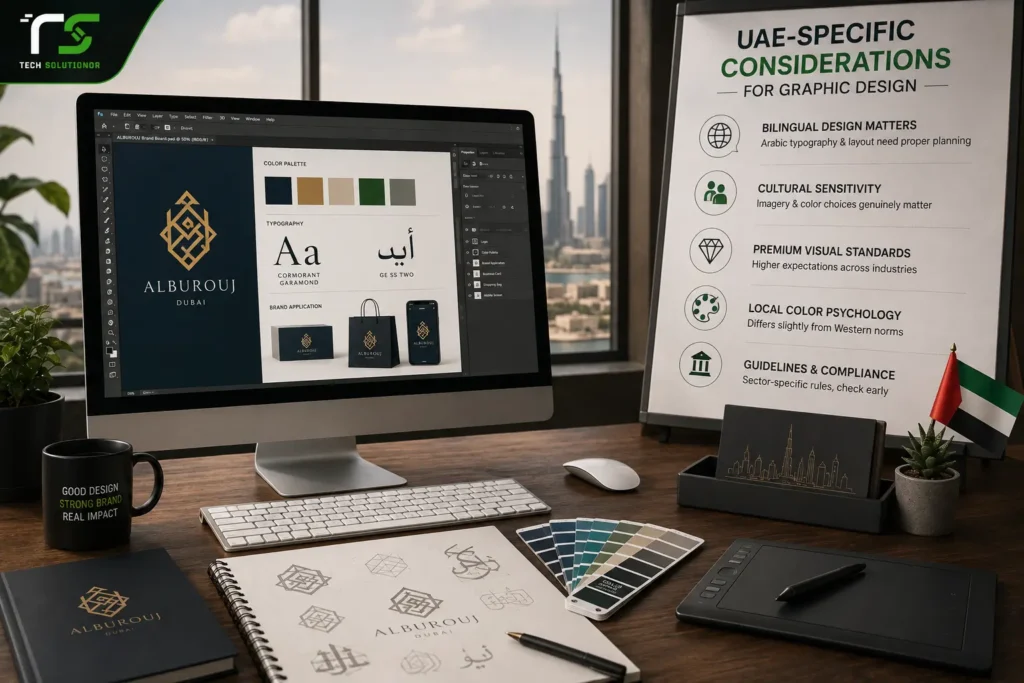
Designing for the UAE market for years now has taught me this region has its own visual expectations that outsiders often miss entirely:
- Bilingual design matters. Arabic typography and layout direction need proper planning, not a quick translation bolted onto an English design
- Cultural sensitivity in imagery and color choices genuinely matters, what works visually in one market can misread badly in another
- Premium visual standards are expected here more than in a lot of markets, competition across most industries is visually sharp
- Local color psychology differs slightly from Western norms, worth researching before locking in a palette
- Government and industry branding guidelines apply in certain sectors, healthcare and finance especially, so compliance needs checking early
Getting these right from the start avoids a costly redesign later and it genuinely changes how a brand gets received by local customers.
How to Choose the Right Graphic Design Partner
A few honest questions worth asking before committing to any designer or agency and this overlaps quite a bit with how I’d tell someone to evaluate a freelancer vs a full agency for development work too:
- Does their portfolio show range or does every project look identical regardless of the client?
- Do they ask about your business and audience or jump straight to visuals without context?
- Will you receive proper source files and usage rights when the project ends?
- Is revision scope clearly defined upfront or left vague until you’re already mid-project?
If your brand identity is part of a bigger digital push, it’s worth reviewing your social media strategy and ecommerce development plans at the same time, since design touches nearly every customer-facing part of a modern business, not just the logo.
FAQs
1. What is graphic design used for?
Graphic design uses visual elements like color, typography and imagery to communicate a brand’s message clearly. It covers logos, websites, packaging, social media graphics and marketing materials, shaping how customers perceive and trust a business.
2. How much does professional graphic design cost?
Costs depend on scope, a simple logo costs less than a full brand identity system with guidelines and templates. Ongoing design needs cost more over time but usually work out cheaper per asset than hiring separately for each project.
3. Why does graphic design matter for small businesses?
Small businesses often compete against larger, better-funded competitors. Professional design levels that gap by building instant credibility and trust, helping a small business look as established and reliable as a much bigger one.
4. How often should a business update its branding?
There’s no fixed rule but most brands benefit from a design refresh every three to five years or sooner if the look feels visibly dated. Consistent, timeless design choices reduce how often a full rebrand becomes necessary.
5. What makes a graphic design company in Dubai different from a generic freelancer?
A local company understands regional visual expectations, bilingual design needs and cultural nuances that a generic freelancer often misses. This usually means fewer revisions and a brand identity that resonates properly with UAE audiences.
Conclusion
Graphic design isn’t just something that happens once at the start of a business and gets forgotten. It’s an ongoing part of how customers judge whether they trust you, often before they’ve read a single word about what you actually offer.
I’ve watched strong design quietly move the needle on booking rates, conversions and brand recall more times than I can count and I’ve watched weak, inconsistent visuals undercut genuinely great businesses just as often.
If your brand’s first impression isn’t landing the way it should, our team can help you build graphic design that actually reflects the quality of what you do. Let’s talk through where your visuals are falling short.