
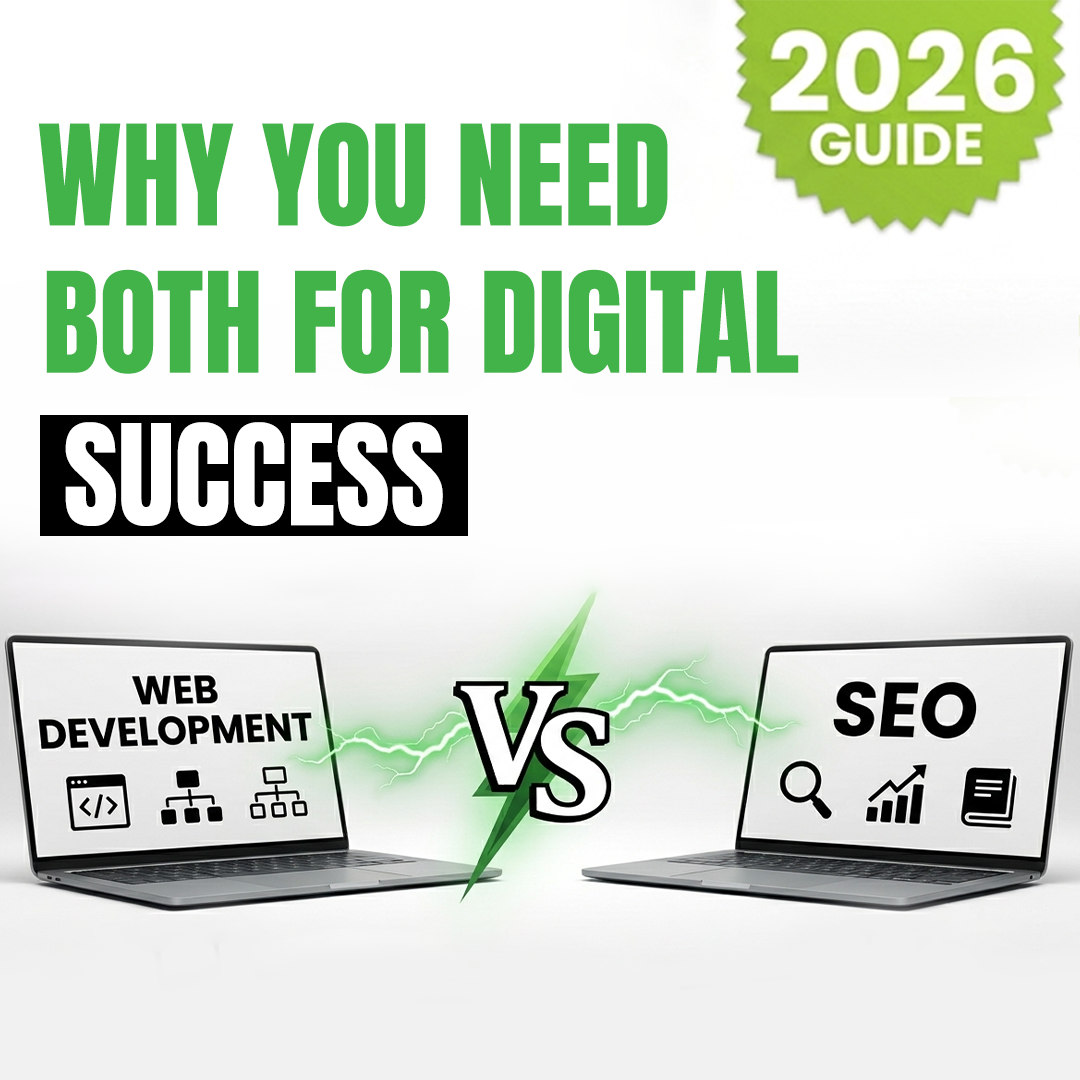
Web Development vs SEO in 2026: Why You Need Both
Web Development vs SEO in 2026: Why You Need Both for Digital Success
In 2026, web development and SEO are integrated, performance-driven websites (Core Web Vitals, mobile-first) combined with semantic, intent-based SEO determine rankings, traffic, and visibility.
In 2026, the digital ecosystem has evolved far beyond traditional websites and basic keyword rankings. Businesses no longer succeed with just web development or just SEO optimization, they need both working together as a unified growth system. Modern search engines powered by AI, machine learning, and generative search experiences now evaluate websites based on technical performance, user experience, semantic relevance, and content depth.
This is why the debate of web development vs SEO in 2026 is not about competition anymore, it is about collaboration and integration. Agencies like TechSolutionor are increasingly focusing on blending SEO-friendly web development practices with advanced search engine optimization strategies to build high-performing digital assets.

The Core Shift in 2026: From Websites to Intelligent Digital Systems
Search engines like Google now function across AI-powered ranking systems which value:
- User experience signals (UX)
- Core Web Vitals performance
- Semantic content understanding
- Mobile-first indexing
- Structured data and schema markup for SEO
- Website authority and trust signals
This means that both developers and SEO specialists must collaborate from day one of any project. Core Web Vitals are now one of the strongest ranking factors in Google’s algorithm, as officially explained in Google’s Core Web Vitals documentation.
Key Industry Observation (2026 Trend)
A recent shift shows that websites built without SEO input often require 40–60% more optimization work later, increasing cost and delaying rankings.
Web Development vs SEO: Fundamental Differences Explained
Understanding the difference between these two disciplines is essential before combining them effectively. Understanding the difference between design and development is also essential before building a high-performing website.

Comparison Table: Web Development vs SEO in 2026
| Aspect | Web Development | SEO Optimization |
|---|---|---|
| Primary Focus | Building website structure | Improving search visibility |
| Core Skills | frontend developer, backend developer, full stack developer | keyword research, content optimization strategy |
| Success Metric | Performance, usability | Organic traffic growth |
| Tools | frameworks, hosting, APIs | Google Search Console, SEO tools |
| Time Impact | Initial build phase | Continuous optimization |
What Web Development Focuses On in 2026
Modern businesses require high-performance websites that are built with scalability and user experience in mind.
The web development is no more only coding websites. It now includes:

1. Website Architecture and Scalability
A strong website architecture ensures:
- Easy crawlability
- Fast indexability
- Scalable backend systems
Search engines now prefer websites that are logically structured and easy to navigate. Building a scalable website structure also impacts overall development cost, especially for businesses planning long-term growth.
2. Frontend & Backend Optimization
- Frontend development emphasizes UI/UX, responsive design, and performance.
- The backend development manages the database efficiency API well.
- Full stack development connects both sides for smooth performance.
Choosing the right platform also affects performance, scalability, and SEO capabilities.

3. Performance-Centric Development
Developers now optimize for:
- page speed optimization
- hosting and server speed
- CDN optimization
- website performance optimization
As of 2026, these elements have a significant impact on Core Web Vitals, one of the top-ranking signals.
What SEO Focuses On in 2026
SEO in 2026 is far more advanced than traditional keyword placement.
1. Search Engine Optimization Strategy
Modern SEO includes:
- SEO optimization
- search engine optimization frameworks
- semantic SEO modeling
- AI-driven search results adaptation
Businesses that want long-term growth must invest in a structured and results-driven SEO strategy. According to Google Search Central guidelines, modern SEO requires a combination of technical optimization, high-quality content, and user-focused strategies.

2. Content & Keyword Intelligence
SEO specialists now focus on:
- keyword research based on search intent optimization
- long-tail keywords for niche targeting
- content optimization strategy for topic authority
3. Technical SEO Integration
Key areas include:
- structured data implementation
- schema markup SEO
- crawlability and indexability improvements
- and internal linking strategy
How SEO Impacts Modern Web Development
Also a major change for 2026 is SEO now impacts how websites are built, not just ranked.
SEO-Friendly Web Development Practices
Developers must now consider:
- SEO-friendly code structure
- HTML semantics
- clean URL architecture
- metadata optimization
Technical Insight
Websites built without SEO input often suffer from:
- poor crawlability
- weak indexability
- low organic visibility
This is why SEO-friendly web development practices have become an industry standard.
Core Web Vitals: The Bridge Between SEO and Development
Core Web Vitals are now one of the strongest ranking factors in Google’s algorithm.
Key Metrics
- Largest Contentful Paint (LCP)
- First Input Delay (FID)
- Cumulative Layout Shift (CLS)
Impact on Rankings
A simple industry benchmark shows:
Fast Website (Good Core Web Vitals) → Higher rankings + better UX
Slow Website (Poor Core Web Vitals) → Lower rankings + high bounce rate
Performance Insight Chart
Performance Score (%)
SEO + Dev Integrated ████████████████████████ 95%
SEO Only ███████████████ 70%
Dev Only █████████ 55%
No Strategy ███ 20%
Why Web Development Alone Is Not Enough in 2026
Even the most advanced web development cannot guarantee visibility without SEO.
Common issues include:
- No organic traffic growth strategy
- Lack of search intent alignment
- Missing semantic SEO structure
- Poor internal linking strategy
Without SEO, websites remain invisible to search engines despite being technically perfect. A professionally developed website ensures better performance, scalability, and long-term digital success.
Why SEO Alone Is Not Enough Without Development
Similarly, SEO alone cannot succeed without strong development support.
Limitations include:
- Slow page speed due to poor hosting
- Broken website architecture
- Weak mobile-first indexing performance
- Poor UX design affecting engagement
This creates a gap between visibility and usability. Without professional optimization, even well-built websites fail to achieve consistent rankings.
The 2026 Reality: Integration is the New Standard
Successful digital platforms in 2026 follow one principle:
“SEO defines visibility. Web development defines experience. Together, they define success.”
Mini Case Insight (Industry Observation)
The execution model you choose, whether freelancer or agency, significantly impacts timelines and results.
A standard comparison of two project types:
| Factor | SEO + Dev Integrated | Separate Execution |
|---|---|---|
| Time to Rank | 2–3 months | 5–8 months |
| Cost Efficiency | High | Moderate to Low |
| Performance | Optimized | Inconsistent |
| User Experience | Seamless | Fragmented |

AI in Web Development and SEO, The Game Changer of 2026
Artificial intelligence has changed the web development and SEO optimization game completely. By 2026, websites are no longer static platforms, they are intelligent systems that adapt to AI-driven search results and user behavior in real time. Agencies like TechSolutionor are already leveraging AI to build smarter, faster, and more optimized websites.
AI is rapidly transforming how modern websites are built, optimized, and scaled for performance.
How AI is Reshaping Search Engine Optimization
Modern search engine optimization now includes:
- AI search optimization for predictive ranking
- generative AI SEO for content creation
- semantic SEO based on user intent
- real-time optimization using behavioral data
Search engines now prioritize:
- semantic search
- contextual meaning
- user journey analysis
This means traditional keyword-based SEO is evolving into intent-driven optimization.
AI in Web Development Workflows
Developers are using AI for:
- automated code generation
- performance optimization suggestions
- UX design improvements
- predictive scalability
AI also helps improve:
- website performance metrics
- error detection
- dynamic content delivery
Google Ranking Factors in 2026 You Must Understand
Google algorithm has developed over the years and is particularly focused on:
- user experience (UX)
- content quality
- technical SEO
- authority and trust
Core Ranking Signals in 2026
| Ranking Factor | Importance Level |
|---|---|
| Core Web Vitals | Very High |
| Content relevance | Very High |
| E-E-A-T SEO factors | High |
| Mobile-first indexing | High |
| Website trust signals | High |
| Backlink building | Moderate |
Shift from Keywords to Search Intent
Modern SEO focuses on:
- search intent optimization
- semantic content clusters
- contextual keyword placement.
This change has made keyword research more strategic than it ever was.
Technical SEO vs Web Development, Where They Meet
The intersection of technical SEO and development is where real optimization happens.
Crawlability and Indexability Fundamentals
Search engines rely on:
- crawlability (how easily bots access pages)
- indexability (how pages are stored and ranked)
Developers must ensure:
- clean code
- logical URL structures
- optimized robots.txt and sitemaps
Structured Data and Schema Markup SEO
Using structured data and schema markup helps search engines understand content better.
Benefits include:
- enhanced SERP features
- improved visibility in featured snippets
- better click-through rate (CTR)
JavaScript SEO Challenges in Modern Frameworks
Modern frameworks introduce challenges such as:
- rendering issues
- delayed content indexing
- JavaScript SEO issues
Solutions include:
- server-side rendering
- dynamic rendering
- pre-rendering strategies
UX, UI, and SEO, The Ranking Connection
User experience is now directly linked to rankings.
Why UX Matters More Than Ever
Key UX signals include:
- bounce rate optimization
- click-through rate (CTR)
- session duration
A strong UI/UX design improves:
- engagement
- conversions
- retention

Mobile-First Indexing and Responsive Design
Google has begun ranking websites by their mobile performance.
Essential factors:
- responsive web design
- fast mobile loading speed
- optimized UI/UX design
Poor mobile optimization leads to:
- lower rankings
- reduced organic traffic growth
Google has clearly stated the importance of mobile-first indexing in its official documentation, making mobile performance a critical ranking factor. For regions like Dubai, multilingual websites also improve accessibility and search visibility.
Content Strategy and Semantic SEO in 2026
Content is still king, but it has to be more clever now.
Keyword Research and Intent Mapping
Effective keyword research involves:
- identifying long-tail keywords
- understanding user intent
- mapping content to search queries.

Topic Clusters and Pillar Content Strategy
Modern content strategies rely on:
- content clusters SEO
- pillar content strategy
- topic authority building
This improves:
- internal linking strategy
- content depth
- ranking stability
Semantic Search and AI Content Systems
Search engines now use:
- semantic search
- AI content generation
- and contextual analysis
Content must:
- answer user queries fully
- provide value
- maintain natural readability.
Digital Marketing Strategy, SEO + Development Alignment
A strong digital marketing strategy integrates both SEO and development.
Building Organic Traffic Through Integration
To achieve organic traffic growth, websites must:
- load fast
- provide valuable content
- offer smooth navigation
Tracking metrics include:
- website performance metrics
- user engagement
- ranking improvements
Conversion Rate Optimization Through UX
Conversion rate optimization depends on:
- website usability
- clear CTAs
- smooth user journey
A well-developed website improves both:
- conversions
- SEO rankings
SEO-Friendly Web Development Practices
Present-day websites need to be SEO-friendly.
On-Page SEO and Metadata Optimization
Key elements include:
- metadata optimization
- title tags optimization
- meta descriptions SEO
Image and Media Optimization
Important practices:
- image optimization SEO
- alt text optimization
- compressed media files
Internal and External Linking Strategy
Effective linking improves:
- crawlability
- authority distribution
- user navigation
Includes:
- internal linking strategy
- external linking

Real Agency Insight, Why TechSolutionor Stands Out
In 2026, not all agencies are equal. TechSolutionor differentiates itself by:
Integrated SEO + Development Approach
Unlike many agencies that separate teams, TechSolutionor:
- combines SEO specialists and developers
- builds SEO-friendly code from day one
- focuses on long-term scalability
Choosing the right development partner plays a crucial role in long-term digital success.
Price vs Quality Comparison
| Factor | Cheap Agencies | TechSolutionor |
|---|---|---|
| Cost | Low | Competitive |
| Quality | Inconsistent | High |
| SEO Integration | Minimal | Full |
| Performance | Average | Optimized |
| ROI | Unstable | Long-term growth |
Real-World Experience Insight:
Based on industry experience:
Businesses that invest in integrated SEO + development strategies see up to 3x higher ROI compared to those using separate services.
Advanced SEO Trends Shaping 2026
This is a world where AI-first search engines, predictive algorithms, and hyper-personalized search experiences shape the digital landscape of 2026. This means SEO optimization is no longer static, it is adaptive, smart, and cost-effective.
Voice Search Optimization and Conversational SEO
Voice assistants and AI search interfaces have increased the importance of:
- voice search optimization
- conversational queries
- natural language processing
Websites must now answer questions in a human-like, direct format to appear in voice-based results.
Example:
Instead of “SEO services Dubai,” users now ask:
“Which is the best SEO agency near me in 2026?”
This shift requires content built around search intent optimization and long-tail keywords.
Zero-Click Searches and Featured Snippets
A major trend is the rise of:
- zero-click searches
- featured snippets dominance
- AI-generated SERP answers
To rank in this environment, websites must:
- structure content clearly
- use schema markup SEO
- provide concise answers
AI-Driven Search Results (SGE Evolution)
Google’s AI-powered systems now prioritize:
- semantic search understanding
- AI-driven search results
- contextual ranking signals
This means ranking depends more on:
- content depth
- authority
- user satisfaction signals
E-E-A-T and Authority Building in 2026
Google heavily relies on E-E-A-T SEO factors:
- Experience
- Expertise
- Authoritativeness
- Trustworthiness
How Websites Build Authority
Key strategies include:
- authority building SEO
- strong backlink building
- consistent content marketing
- brand mentions across the web
Website Trust Signals That Matter
Search engines now evaluate:
- HTTPS security SEO
- website trust signals
- domain reputation
- content authenticity
Even small trust improvements can significantly impact rankings. Website security is now a major trust factor that directly influences both rankings and user confidence.
SEO Roadmap 2026, What Agencies Must Follow
A modern SEO roadmap 2026 includes:
Phase 1 — Technical Foundation
- SEO-friendly web development practices
- Core Web Vitals optimization
- website architecture planning
- mobile-first indexing compliance
Phase 2 — Content & Semantic Layer
- semantic SEO
- content clusters SEO
- pillar content strategy
- long-tail keywords targeting
Phase 3 — Authority & Growth
- backlink building
- internal linking strategy
- digital marketing strategy expansion
- organic traffic growth tracking
Common Mistakes Developers Make in SEO
Even experienced developers often make SEO-critical mistakes.
Ignoring Crawlability and Indexability
Without proper structure:
- search engines cannot properly index pages
- rankings drop significantly
- organic traffic growth slows down
Poor Core Web Vitals Optimization
Ignoring performance leads to:
- higher bounce rates
- lower engagement
- reduced ranking signals
Weak Metadata and On-Page SEO
Missing:
- metadata optimization
- title tags optimization
- meta descriptions SEO
This reduces click-through rate (CTR) significantly.
Final Comparison, Web Development vs SEO in 2026
| Factor | Web Development | SEO Optimization |
|---|---|---|
| Goal | Build system | Drive visibility |
| Focus | UI, UX, performance | Rankings, traffic |
| Dependency | Needs SEO for visibility | Needs dev for structure |
| Success Metric | Speed + usability | Organic traffic growth |
| Future Trend | AI-powered apps | AI-driven search results |
Why Businesses Need Both (Final Insight)
In 2026, success belongs to businesses that combine both disciplines.
- Web development ensures performance and experience
- SEO ensures visibility and traffic
Without one, the other cannot fully succeed. Many businesses fail because they don’t evaluate agencies based on technical expertise and SEO integration.
Agencies like TechSolutionor demonstrate this integration by building systems where:
- developers and SEO experts collaborate
- content is structured for search intent optimization
- websites are built for both humans and algorithms
FAQs
Is web development more important than SEO in 2026?
Neither is more important alone. Web development builds the foundation, while SEO ensures visibility. Both are required for long-term success.
Can a website rank without SEO in 2026?
A website may get indexed, but without SEO optimization, it will struggle to rank competitively in search engines.
Why is SEO important for developers?
SEO helps developers build websites that are:
- faster
- more structured
- search engine friendly
- optimized for Core Web Vitals
What is the future of SEO in 2026?
SEO is becoming:
- AI-driven
- semantic-based
- intent-focused
- integrated with UX and development
Do developers need to learn SEO?
Yes. Modern developers benefit from understanding:
- technical SEO
- crawlability
- website architecture
- performance optimization
Final Strategy Framework (2026 Best Practice Model)
The “SEO + Dev Unified Model”
- Build (Development Phase)
- SEO-friendly architecture
- fast performance
- mobile-first design
- Optimize (SEO Phase)
- keyword research
- semantic SEO
- content optimization strategy
- Scale (Growth Phase)
- backlink building
- authority building SEO
- conversion rate optimization
If you’re planning to build or optimize your website, getting expert guidance can help you avoid costly mistakes.
Final Conclusion
In 2026, the debate of web development vs SEO is no longer about choosing one over the other. Instead, it is about integration, collaboration, and strategy alignment. The best way to start is by discussing your project requirements with professionals who understand both SEO and development.
Businesses that treat SEO and development as separate functions will fall behind. Those that combine them, like forward-thinking agencies such as TechSolutionor, will dominate search rankings and user experience simultaneously.


Harleyled
July 6, 2026八千代醫美集團特別聘請來自台大、馬偕、長庚、台北醫學大學等三十多位,擁有豐富醫美經驗的專業醫師及多位女醫生看診
RicardoEvigo
July 6, 2026樂貸網 全台最多身分證借錢、小額借款服務資訊平台推薦
RandyCix
July 7, 2026品空間—-您是SOHO族、團隊創業、新創工作者-
AndrewVog
July 7, 2026第一借錢網-借錢,小額借款
DarrellTwirm
July 7, 2026水微晶玻尿酸 – 八千代醫美集團
Edwarddug
July 7, 2026第一借錢網
Thomasstina
July 7, 2026樂貸網|全台最多身分證借錢、小額借款服務資訊平台推薦